
Contents
Overview
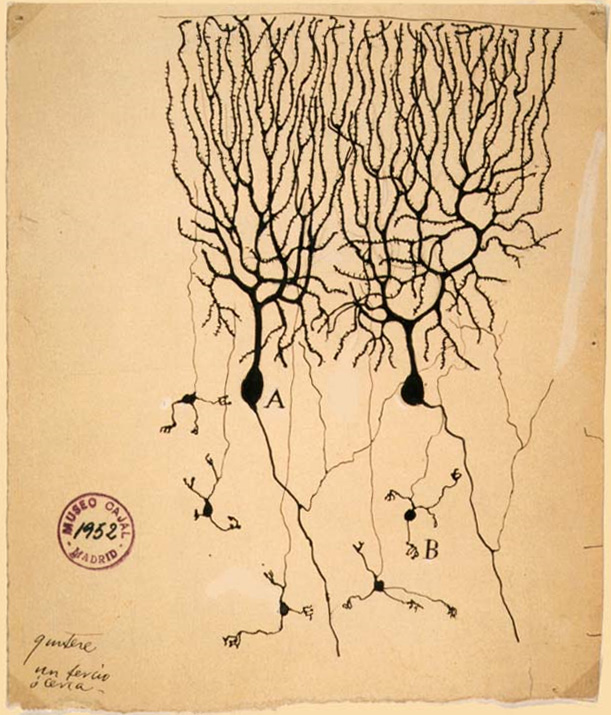
The formal discipline of neuroscience, as a distinct field, began to coalesce in the mid-20th century, though its roots stretch back to ancient observations of the brain and nervous system. Early pioneers like Santiago Ramón y Cajal laid foundational groundwork with his neuron doctrine, proposing that the nervous system is composed of discrete cells. This was significantly advanced by Camillo Golgi's staining technique, which, ironically, Golgi believed supported a reticular theory of continuous networks. The mid-20th century saw the establishment of key societies and journals, such as the Society for Neuroscience (SfN), founded in 1969, and the journal Neuroscience, which began publication in 1976, marking the field's formalization. This period also witnessed breakthroughs in understanding synaptic transmission and neuronal signaling, driven by researchers like Bernard Katz and John Eccles.
⚙️ How It Works
At its core, neuroscience investigates how billions of neurons and trillions of synapses interact to produce thought, emotion, and action. Neurons communicate via electrochemical signals: electrical impulses (action potentials) travel down axons, triggering the release of neurotransmitters at synapses, which then bind to receptors on the next neuron, potentially initiating a new electrical signal. This intricate communication network forms complex circuits responsible for specific functions. Techniques like EEG measure collective electrical activity, while fMRI tracks blood flow changes associated with neural activity, providing insights into brain function at different scales. Computational neuroscience models these interactions using mathematical frameworks and computer simulations, attempting to replicate neural processes.
📊 Key Facts & Numbers
The field of neuroscience is vast and growing. The global neuroscience market was valued at approximately $11.4 billion in 2022 and is projected to grow significantly. Research funding for neuroscience initiatives, such as the BRAIN Initiative launched in 2013, has seen substantial investment, with the U.S. government alone committing over $4.5 billion by 2023. Over 40,000 scientific articles are published annually in neuroscience-related journals, reflecting the intense research activity. The Society for Neuroscience boasts over 35,000 members worldwide, underscoring the field's global reach and scale.
👥 Key People & Organizations
Key figures have shaped neuroscience from its inception. Santiago Ramón y Cajal's neuron doctrine remains a cornerstone. Eric Kandel, a Nobel laureate, elucidated molecular mechanisms of memory. David Hubel and Torsten Wiesel made seminal discoveries about visual processing. Organizations like the Society for Neuroscience (SfN) are crucial for fostering collaboration and disseminating research, while institutions like MIT's Department of Brain and Cognitive Sciences and the Max Planck Institute for Brain Research are leading research hubs. The Allen Institute for Brain Science has made significant contributions through large-scale data generation and open-access resources, democratizing neuroscience research.
🌍 Cultural Impact & Influence
Neuroscience has profoundly influenced our understanding of ourselves and society. It underpins fields like psychology, psychiatry, and artificial intelligence, offering biological explanations for behavior and cognition. Neuroplasticity, the brain's ability to reorganize itself, has reshaped therapeutic approaches for brain injury and learning disabilities. Public fascination with the brain is evident in popular science books, documentaries, and the rise of 'neuromarketing' and 'neuroeducation,' though these applications often face scrutiny for oversimplification. The quest to understand consciousness, memory, and decision-making continues to capture public imagination, driving interest in brain-related topics.
⚡ Current State & Latest Developments
Current neuroscience research is rapidly advancing, particularly in areas like brain-computer interfaces (BCIs) and optogenetics. BCIs, such as those developed by Neuralink, aim to restore function for individuals with paralysis by enabling direct communication between the brain and external devices. Optogenetics, a technique using light to control genetically modified neurons, has revolutionized the study of neural circuits in animal models, allowing for unprecedented precision in manipulating brain activity. Advances in single-cell sequencing and connectomics are mapping neural connections at an unprecedented resolution, promising deeper insights into brain organization and function. The development of AI models inspired by neural networks also continues to be a major area of cross-disciplinary research.
🤔 Controversies & Debates
Significant debates persist within neuroscience. The 'hard problem of consciousness'—explaining subjective experience—remains a profound philosophical and scientific challenge, with differing views on whether it can be fully explained by neural activity alone. The interpretation of brain imaging data, particularly fMRI, is also debated, with concerns about reproducibility and the potential for overstating findings. Ethical considerations surrounding neurotechnology, such as BCIs and cognitive enhancement, are increasingly prominent, raising questions about privacy, autonomy, and equity. The extent to which animal models accurately reflect human brain function is another ongoing discussion.
🔮 Future Outlook & Predictions
The future of neuroscience points towards increasingly sophisticated tools for mapping and manipulating neural circuits. We can expect further breakthroughs in understanding and treating neurological and psychiatric disorders like Alzheimer's disease, Parkinson's disease, and depression, potentially leading to personalized therapies. The development of advanced BCIs could revolutionize assistive technologies and human-computer interaction. Furthermore, the integration of neuroscience with artificial intelligence may lead to more sophisticated AI systems and a deeper understanding of intelligence itself. The ethical frameworks governing these powerful technologies will need to evolve in parallel with scientific progress.
💡 Practical Applications
Neuroscience has direct applications across numerous sectors. In medicine, it's fundamental to neurology and psychiatry, guiding the diagnosis and treatment of conditions like epilepsy, stroke, schizophrenia, and addiction. In technology, it inspires the design of artificial intelligence algorithms and neuromorphic computing. Education and learning sciences draw on neuroscience to understand memory formation and cognitive development, informing pedagogical strategies. The legal system is increasingly grappling with neuroscientific evidence in cases of criminal responsibility and eyewitness testimony. Even fields like marketing and economics are influenced by insights into decision-making and consumer behavior, though these applications often spark ethical debates.
Key Facts
- Category
- science
- Type
- concept